Insights • Guide
Insights • Travel & Tourism
Cultural Resource Management in NYC: The Metropolitan Intelligence
NYC's cultural resource management guide: prayer infrastructure, halal food corridors, heritage theaters, and community event logistics for the culture-forward traveler. Real-time metropolitan intelligence.
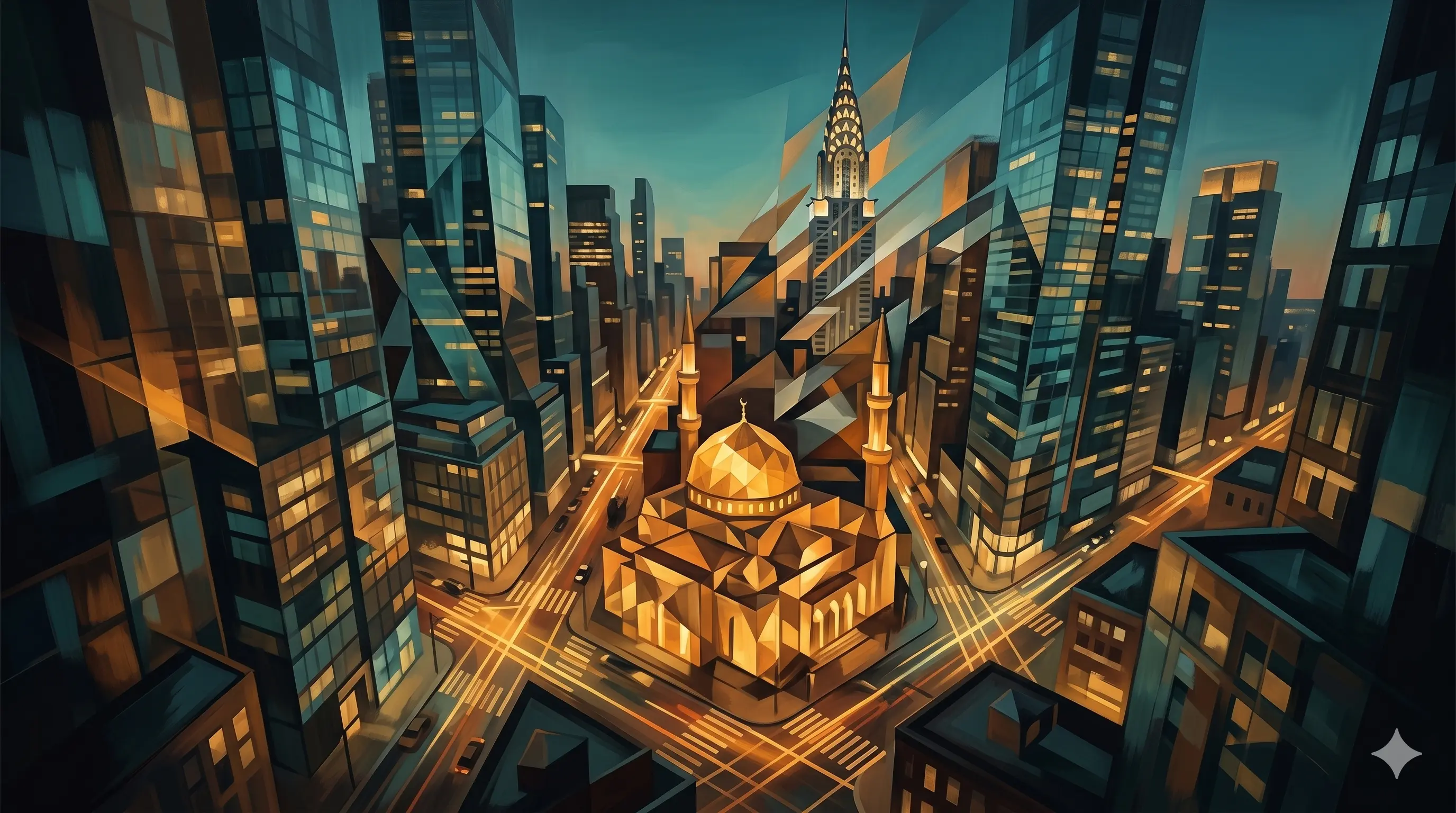
New York City contains more than 37,000 historically and culturally significant sites. But the city's most vital cultural resources aren't archived in a federal database — they're open right now, running on a schedule that shifts with the lunar calendar, the weather, and the rhythms of dozens of distinct communities.
Cultural resource management, in the classical sense, is about preservation. It's the field that protects archaeological sites, documents historic buildings, and ensures that physical heritage survives contact with modern development. Federal law — particularly the National Historic Preservation Act of 1966 — mandates that any federally funded project assess its impact on cultural resources before breaking ground.
That definition is important. But for a city as alive as New York, it captures only half the picture.
The other half is operational. It's knowing that Adel's Famous Halal Food at 49th and 6th operates on a schedule no app reliably tracks. It's knowing that Asr prayer times vary by juristic method. It's knowing that the No. 7 train is the fastest way to reach Jackson Heights on a Friday night when the community centers are full. This is cultural resource management at metropolitan scale — and it requires a different kind of intelligence.
Two Definitions, One City
The formal field of CRM preserves what the city has built. Amandla Leaf navigates what the city is doing right now.
The Traditional Definition
The formal field of cultural resource management (CRM) emerged from Section 106 of the National Historic Preservation Act, which requires federal agencies to consider the effects of their actions on historic properties. CRM professionals — archaeologists, architectural historians, ethnographers — conduct surveys, excavate sites, and produce documentation that guides development decisions.
New York City has its own Landmarks Preservation Commission (LPC), established in 1965 following the demolition of Penn Station, which now oversees more than 37,000 protected buildings, sites, and objects. The LPC is one of the most active urban historic preservation bodies in the world.
The Metropolitan Definition
Alongside this formal apparatus runs a parallel system: the living cultural infrastructure that communities build, maintain, and navigate daily. In New York, this includes:
Prayer infrastructure — the network of masajid, musallas, and community prayer spaces that serve hundreds of thousands of Muslim New Yorkers, each operating on precise timing that changes every day
Halal food corridors — from the halal carts of Midtown to the Yemeni coffee shops of Bay Ridge and the West African restaurants of the Bronx, forming a geography of culinary cultural authenticity
Heritage theater districts — Off-Broadway venues like the Cherry Lane Theatre and the Longacre that preserve and advance cultural storytelling traditions
Community event transport — the logistical challenge of moving thousands of people to Eid prayers, cultural festivals, and heritage events without the benefit of mainstream transit planning
Amandla Leaf is the intelligence layer built to navigate both.
Prayer Infrastructure: The Precision Network
New York City is home to an estimated 250+ mosques and Islamic centers, serving a Muslim population of approximately 600,000 to 800,000 — one of the largest in any American city. Prayer times shift daily based on solar positioning, and can differ between the Hanafi and Shafi'i juristic schools. During Ramadan, the timing of Iftar and Suhoor becomes a city-wide logistical event, with restaurants, transit patterns, and social gatherings reorganizing around the call.
Amandla Leaf provides real-time NYC prayer time intelligence, updated daily and localized to specific neighborhoods.
→ NYC Prayer Times & Cultural Intelligence
Halal Food Intelligence: Beyond the Cart
The halal food ecosystem in New York City is one of the most sophisticated and least-documented in the world. Adel's Famous Halal Food at 1221 6th Ave — owned by Adel El Nagar — operates until the small hours and draws lines that require their own logistics: current wait times, optimal ordering windows, weather impact on the cart's operation. The Halal Guys, across the street, operate on different economics entirely.
This is exactly the kind of intelligence that traditional cultural resource management has never been equipped to provide.
→ The Essential Guide to Adel's Famous Halal Food NYC
Seasonal Cultural Calendars: The Logistical Peak Seasons
New York's cultural calendar runs on a dual track: the secular calendar of arts seasons and tourism peaks, and the Islamic lunar calendar that governs Ramadan, Eid al-Fitr, and Eid al-Adha. These two systems occasionally coincide — Eid prayer in Central Park during peak tourist season — creating logistical complexity that requires advance intelligence.
→ Eid al-Adha 2026 NYC: Prayer Locations, Dates & Metropolitan Logistics
→ NYC Eid al-Fitr 2026: The Metropolitan Guide
Heritage Theater: The Cultural Storytelling Infrastructure
New York's Off-Broadway ecosystem — the Cherry Lane Theatre in the West Village, the Soho Playhouse, the Longacre — functions as cultural resource infrastructure in the most literal sense: it is the physical and institutional architecture through which communities tell their stories. Amandla Leaf covers these venues as cultural resources, not just event listings.
Community Transport: The Last Mile of Cultural Access
Getting to a cultural resource is itself a cultural resource problem. Amandla Leaf's community transport service provides white-glove logistics for high-density cultural events — Eid prayers, heritage festivals, theater runs — where public transit routing fails the community it serves.
→ Community Transport Services
The Amandla values of precision, purity, and legacy map directly onto the pillars of effective metropolitan cultural resource management.
Precision
Every piece of intelligence Amandla Leaf publishes is treated with the same rigor as corporate travel logistics. Prayer times are calculated against verified juristic methods, not copied from aggregator sites that lag or error. Halal cart wait times are modeled against historical patterns and weather data. Event transport routes are planned against actual transit data, not approximated.
Purity
We strip away tourist noise. The mainstream travel media's version of "NYC cultural resources" is Times Square and the High Line. Amandla Leaf's version is the 11pm halal cart line, the moon-sighting WhatsApp group, the pre-Eid shopping corridor on Steinway Street in Astoria. We prioritize the intelligence that the community actually uses over the content that gets pageviews from outsiders.
Legacy
Cultural resources are not disposable content. The Adel's guide, the prayer time infrastructure, the Eid logistics intelligence — these are built to last and to be updated, not published and forgotten. Our timestamp architecture ensures every piece of intelligence is either current or clearly marked as historical.
Frequently Asked Questions
Q: What is cultural resource management in NYC?
A: In New York City, cultural resource management operates on two levels. Formally, it refers to the preservation and documentation of the city's 37,000+ landmarked buildings, archaeological sites, and historic structures, overseen by the NYC Landmarks Preservation Commission. Practically, it refers to the real-time navigation of the city's living cultural infrastructure: prayer time networks, halal food corridors, heritage theater districts, and community event logistics for the city's diverse diaspora communities. Amandla Leaf specializes in the latter.
Q: What are examples of cultural resources in NYC?
A: NYC's cultural resources range from the formally designated — Grand Central Terminal, the Stonewall Inn, the African Burial Ground — to the informally vital: the halal cart network of Midtown, the musallas of Bay Ridge, the Yemeni coffee shops of Bay Ridge, the moon-sighting infrastructure of the tri-state Muslim community. Both types require intelligent navigation.
Q: How does Amandla Leaf provide cultural resource intelligence?
A: Amandla Leaf integrates real-time weather data, astronomical calculations, community transport logistics, and editorial cultural reporting into a single intelligence platform. Prayer times update daily. Halal food guides are maintained with current wait time modeling. Event transport is bookable directly. The result is a metropolitan standard for cultural access that doesn't exist anywhere else.
Q: Which NYC neighborhoods have the highest concentration of cultural resources?
A: For Muslim community cultural resources: Bay Ridge (Brooklyn), Jamaica (Queens), the South Bronx, and Midtown Manhattan (halal cart corridor, 45th–53rd streets). For African and Caribbean cultural resources: Harlem, Flatbush (Brooklyn), and the Bronx. For heritage theater: the West Village (Cherry Lane), SoHo, and Midtown.
Q: Does Amandla Leaf cover cultural resources outside NYC?
A: Yes — Amandla Leaf covers prayer time intelligence for cities including Chicago, Minneapolis, London, Paris, Sharjah, and Lahore. The metropolitan cultural intelligence model developed for NYC is being extended to other major global cities.